VERIFIED ALUMNI PORTFOLIO
Akhil Padmakumar
Business Development professional focused on identifying growth opportunities, acquiring high-value clients, and building strong sales pipelines that convert. Passionate about turning strategy into measurable business impact and long-term growth.
Driving Revenue Growth & Building High-Impact Partnerships | Skilled in Lead Generation, Client Acquisition, and Scalable Business Development Strategies | Helping Businesses Expand Faster and Smarter



of total sales driven through a single streamlined outreach system
increase in customer retention across active accounts
total growth achieved within six months
Alumni Case Study Showcase
Real-world projects built by our alumni, highlighting their approach to problem-solving, execution, and measurable impact across different domains.

Founder's Recommendation
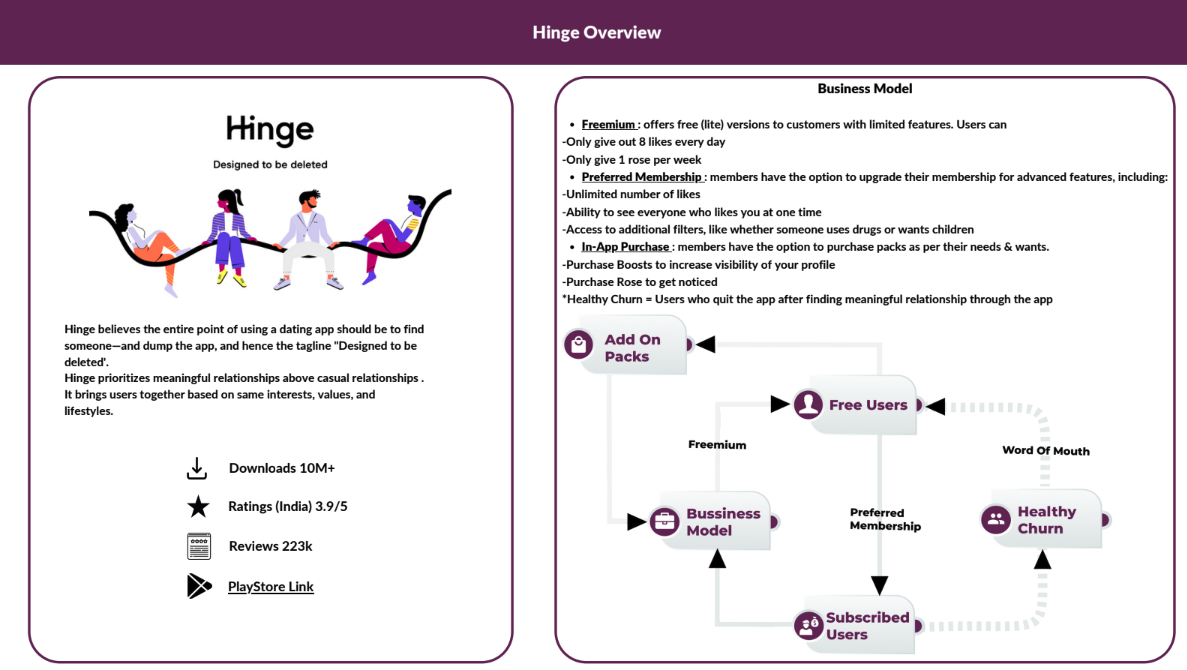
"As Founder of Stravyn Hill, I had the opportunity to work closely with Akhil Padmakumar during his Business Development Internship. Akhil consistently showed initiative, strong communication skills, and a willingness to take ownership of responsibilities. From handling outreach to supporting day-to-day execution, he approached tasks with professionalism and reliability. I’m confident he will be a strong asset to any growth, sales, or business development team he joins."
Prashant X, Founder & CEO @ Stravyn Hill
Work in Practice: Case Study Exploration
Real projects. Real results. Each case study walks through the challenge, the strategy behind the solution, and the impact it created giving you an honest look at how problems get solved and value gets delivered.
Lead generation strategies in digital channels
Cold outreach vs Warm outreach effectiveness
Market research for business expansion
(01)
Project Overview
Cold Outreach vs Warm Outreach: What Actually Opened More Doors in a Competitive B2B Market
There is a common assumption in business development that warm outreach always wins. That introductions, referrals, and existing relationships are the only reliable way to break into competitive markets. This project tested that assumption directly.
The company involved was a mid-sized B2B services firm operating in an industry dominated by larger players with stronger networks and higher visibility. Historically, nearly all new business came through referrals and repeat clients. Warm outreach kept conversations alive, but growth had started to plateau. The pipeline depended too heavily on existing relationships.
The objective was not just to generate leads. It was to understand which approach cold outreach or warm outreach actually created more meaningful opportunities in a market where buyers were already overloaded with vendor pitches.
The intern was tasked with building and executing both outreach motions in parallel.
On one side was warm outreach reconnecting dormant leads, leveraging second-degree introductions, and re-engaging past conversations that had gone cold. On the other side was a fully research-driven cold outreach strategy targeting decision-makers with no prior relationship to the company.
The comparison quickly revealed something important.
Warm outreach generated faster replies and lower friction in the early stages. But cold outreach when personalized properly opened access to entirely new segments the company had never reached before. The quality of the messaging mattered more than whether the relationship already existed.
Instead of treating cold outreach as a volume game, every message was built around relevance. Each prospect was researched individually. Pain points were mapped carefully. Messaging focused less on pitching services and more on demonstrating understanding.
By the end of the engagement, the company had not only revived warm opportunities already sitting in the pipeline but had also started conversations with completely new decision-makers who otherwise would never have engaged.
The result was not a verdict that one method replaces the other. It was a clearer understanding of where each approach performs best and how combining both creates a far stronger business development engine than relying on referrals alone.

(02)
Clients Goal and Challenge
Client’s Goal
Understand which outreach strategy cold or warm generates stronger business opportunities in a crowded B2B environment while building a repeatable outbound system that could scale beyond referrals.
The company wanted more than activity metrics. The goal was to identify which outreach motion consistently led to qualified conversations, discovery calls, and real pipeline growth.
Challenge
Both outreach models came with limitations.
Warm outreach benefited from familiarity, but the pool was limited. Existing networks could only generate so many opportunities before growth slowed. Many past leads had already been approached multiple times without progress.
Cold outreach faced the opposite problem. There was no trust, no recognition, and no existing relationship to rely on. Decision-makers in this space were already receiving dozens of generic sales messages every week. Most were ignored immediately.
The real challenge was not simply getting responses. It was understanding what actually creates credibility fast enough for a prospect to engage whether they already knew the company or not.
Previous outreach attempts had relied heavily on templates and broad messaging, producing inconsistent results and little insight into why conversations were failing to start.
Stay updated by subscribing to our newsletter.
Get sharp strategy insights delivered directly to your inbox. No noise, no fluff, just thinking that moves your business forward.
(03)
Our Process
Business Development Strategy
1
Parallel Outreach Structure
Instead of choosing one method over the other, both cold and warm outreach strategies were executed simultaneously.
Warm outreach focused on dormant leads, former conversations, referrals, and second-degree connections. Cold outreach targeted completely new decision-makers with no prior interaction history.
Tracking both approaches side by side made it possible to compare response quality, conversion patterns, and engagement behavior directly.
2
Deep Prospect Research and Context Building
Cold outreach was never treated as mass outreach.
Every prospect was researched individually including company positioning, recent business activity, hiring patterns, expansion signals, and operational challenges. Messaging referenced situations specific to the prospect’s environment rather than generic industry assumptions.
Warm outreach used a different approach. Instead of restarting conversations with “just checking in” messages, re-engagement was framed around new business insights, updated positioning, or fresh context relevant to the lead’s current priorities.
3
Messaging and Sequencing Strategy
Separate messaging frameworks were built for cold and warm outreach.
Cold outreach emphasized relevance and curiosity. The goal was to earn attention without sounding promotional. Messages stayed concise, specific, and problem-focused.
Warm outreach leaned into familiarity and timing. Since some level of awareness already existed, messaging focused more on restarting momentum and surfacing opportunities that may have been missed earlier.
Both approaches used structured multi-touch sequences across email and LinkedIn. Every follow-up introduced new context instead of simply repeating the same ask.
4
Weekly Analysis and Optimization
Response patterns from both outreach channels were reviewed weekly.
Cold outreach messaging that felt too broad was rewritten quickly. Warm outreach sequences that relied too heavily on past familiarity were adjusted to create more urgency and relevance.
The process stayed highly iterative. Decisions were made based on actual conversation quality not vanity metrics like open rates or connection acceptance percentages.

(04)
Result
Warm Outreach Created Faster Responses. Cold Outreach Created New Opportunities at Scale.
The project produced a clear and measurable outcome.
Warm outreach consistently generated quicker replies and shorter paths to meetings. Existing familiarity reduced friction and made it easier to restart conversations with previously known contacts.
However, cold outreach delivered something the company had struggled to achieve for years access to entirely new buyers outside their existing network.
By the end of the engagement:
- 40 qualified conversations had been initiated across both outreach channels
- 8 prospects progressed into discovery-stage discussions
- 2 partnership opportunities entered active proposal negotiations
- Multiple dormant warm leads were successfully reactivated after months of inactivity
The most important insight was not that cold outreach outperformed warm outreach or vice versa.
It was that both played different strategic roles.
Warm outreach was effective for accelerating trust where some relationship already existed. Cold outreach was effective for expanding market reach and opening opportunities the company otherwise would never have accessed.
The company ultimately walked away with more than meetings or proposals.
They gained:
- A documented outbound framework for both cold and warm outreach
- Tested messaging angles with measurable response data
- A segmented prospect database with research insights attached
- Clear visibility into which type of outreach works best at different stages of growth
The engagement proved something simple but important.
Warm outreach helps you grow within your network.
Cold outreach helps you grow beyond it.
The companies that scale consistently learn how to do both well.