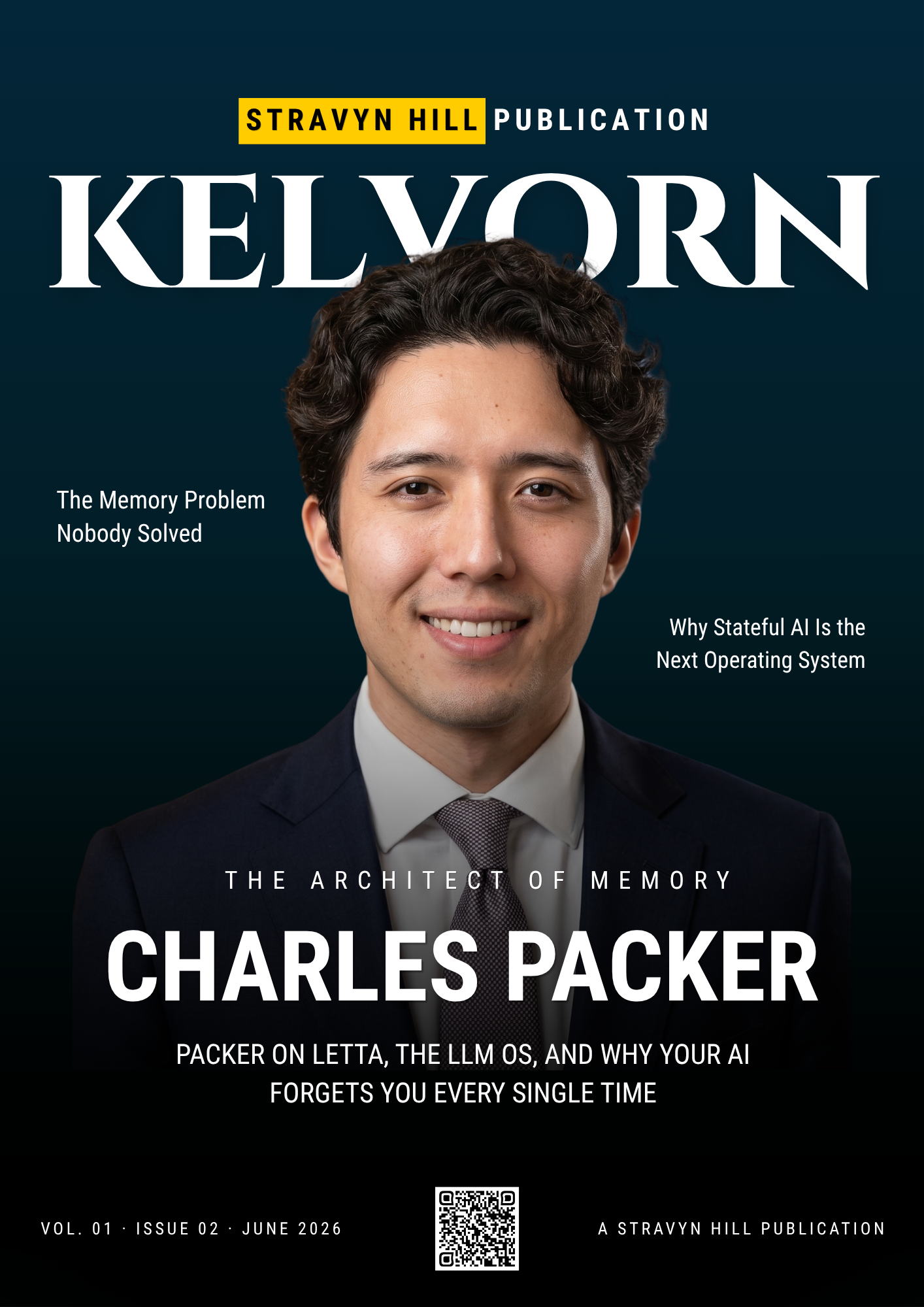
There is a question Charles Packer likes to ask people when they first sit down with him: “Would you rather have an AI coworker that makes the same mistake every single week forever, or a human who makes five times the mistakes upfront but never repeats one?”
It sounds rhetorical. It is not.
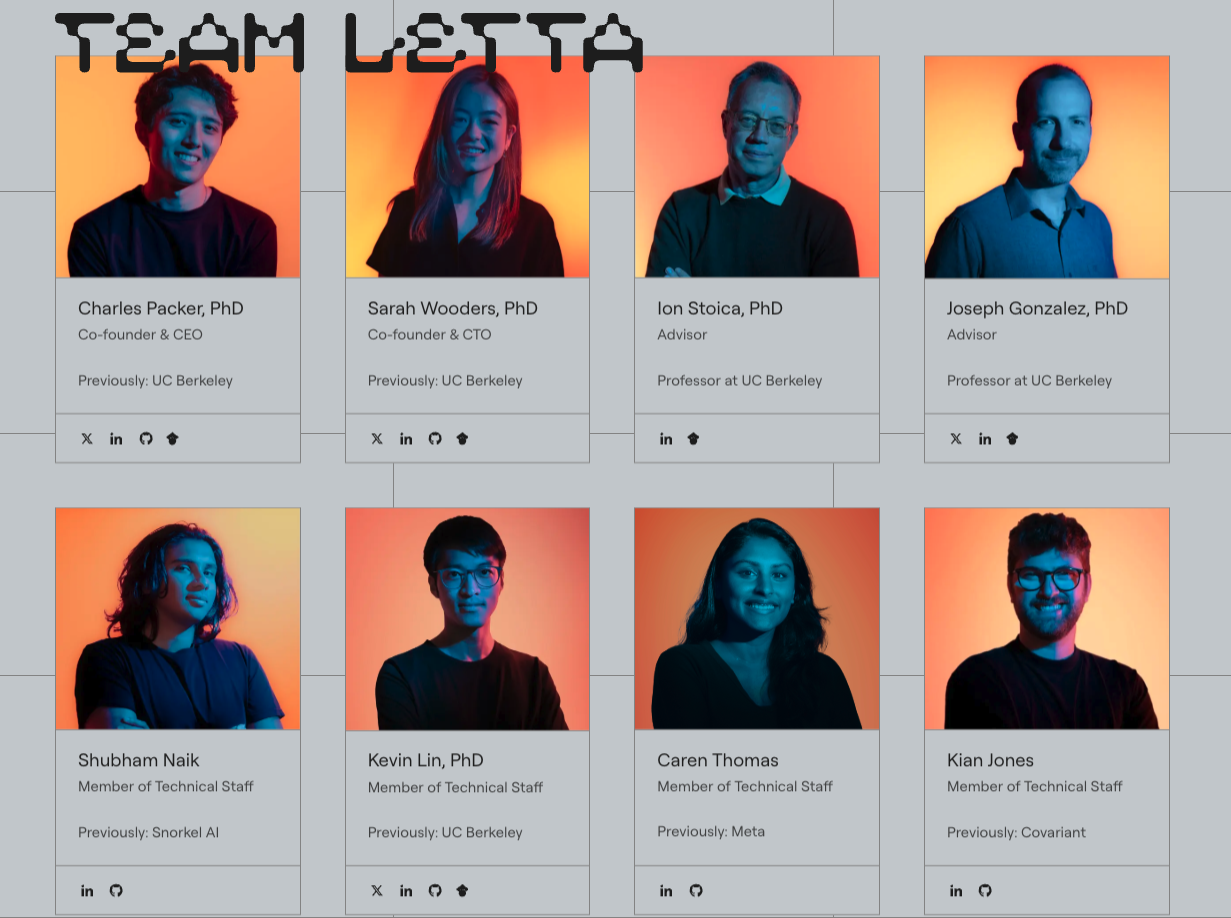
The answer to that question is the entire reason Packer, 32, left a nearly five-year PhD at UC Berkeley, turned down the kinds of post-graduation offers that land people in comfortable positions at Google DeepMind or OpenAI, and instead went to build a company called Letta.
A startup operating at the edge of what AI can actually do in production, not just in benchmarks.
“The fundamental difference between humans and LLMs right now is not intelligence,” Packer told me, sitting across from a whiteboard in Letta’s Jackson Square office in San Francisco, covered in diagrams that looked less like startup planning and more like systems architecture for a new kind of brain. “It is memory.
Humans can learn. LLMs cannot. And everyone in the industry knows this and nobody is really treating it like the crisis it is.”
Related: Why AI Memory Is the Next $100 Billion Infrastructure Problem | How Stateful Agents Are Replacing Traditional CRMs
How a Memory Problem Became a $10 Million Company
The origin of Letta lives in a 2023 research paper. Packer and his co-founder Sarah Wooders, now Letta’s CTO, were working at Berkeley’s BAIR lab and Sky Computing Lab when they published their work on MemGPT, a system designed to give large language models something approximating persistent memory.
The paper landed, and then kept landing. The GitHub repo crossed 10,000 stars. Developers started building on top of it. A community formed organically around something that, up until that point, was mostly a research curiosity.
“We did not expect that kind of reaction,” Packer admits. “But when you talk to developers actually building agent applications, memory comes up every single time. It is the first wall they hit.”
By August 2024, Packer and Wooders had formally launched Letta with a $10 million seed round led by Felicis Ventures, with participation from Sunflower Capital and Essence VC.
The angel roster reads like a who’s who of AI: Jeff Dean, chief scientist at Google DeepMind; Clem Delangue, CEO of HuggingFace; Cristóbal Valenzuela of Runway. These are not names you attach to a company unless you genuinely believe the technical thesis is real.
The thesis, in plain terms: the next battleground in AI is not the model. It is the layer above the model. What Packer calls the “LLM OS.” The persistent state. The memory.
The infrastructure that lets an AI agent actually learn from experience instead of starting from zero every time you open a new chat window.
Related: The $10M Letta Seed Round: What the Investor List Tells You | MemGPT to Letta: The Research-to-Company Arc
What “Stateful AI” Actually Means and Why It Is Hard
Walk into any AI lab today and you will hear the word “agent” used freely, often loosely. A chatbot that calls a function is an agent. A pipeline that runs a web search is an agent. Packer is impatient with this framing.
“Most of what people call agents today are stateless workflows with a pretty interface,” he says. “They do not have memory. They do not learn. They do not get better. If that is your agent, you are not actually in the agent business. You are in the inference business.”
The distinction matters because building stateful AI services, which are systems that retain and update context across sessions, users, and time, is a fundamentally harder engineering problem than wrapping an API call in a Python script. Very few companies are actually doing it at scale. Letta is one of them.
Their most public proof point is Bilt, a loyalty platform now running what Packer describes as “the most advanced agent deployment in the world outside of frontier AI labs.”
Each Bilt user has a swarm of agents, dozens per person, that track category-specific memories about spending behavior, learning and updating in real time from a constant stream of transaction data. Millions of stateful agents. Billions of tokens. Getting smarter with every interaction.
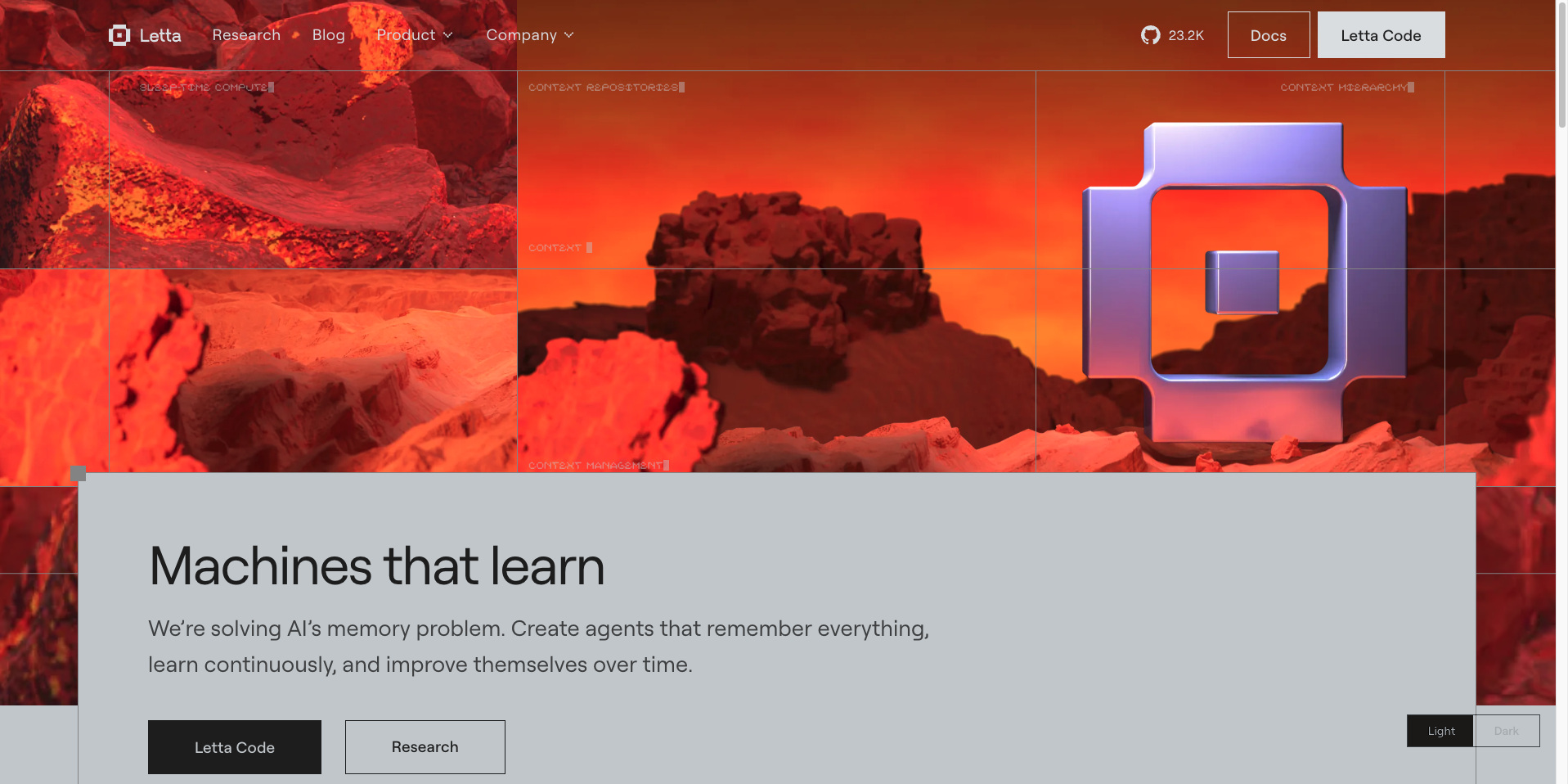
“Before Letta, Bilt was using black-box recommender systems,” Packer explains. “Static rankings. The same offer for a user whether it was their first week on the platform or their third year.
With stateful agents, the system actually learns what a person cares about over time. That is not a product improvement. That is a category shift.”
The technical underpinning is a piece of Letta’s research called Sleep-time Compute, a mechanism that allows agents to process and consolidate memories in the background, the way human memory consolidates during sleep. It is a serious solution to the context window limitations that kill most production agent deployments.
Related: Sleep-time Compute Explained: How Letta Agents Learn Overnight | Bilt’s AI Agent Stack: A Deep Dive
The Open Source Bet That Defines Letta’s Identity
Packer is not building a closed platform. This is a deliberate, principled choice and one that puts Letta in direct ideological opposition to the direction most large AI providers are heading.
“Developers deserve to know what is actually going into their models,” he says, with a directness that suggests he has made this argument enough times that the diplomatic version got worn away. “They deserve to be able to swap providers without losing their data. The moment you let a closed system own your agent’s memory, you have handed over your most valuable asset.”
Letta’s flagship product, Letta Code, is a memory-first coding agent released as open source. It is designed to compete directly with tools like Claude Code, with one core differentiator: it learns. A developer who has been working with the same Letta Code agent for three weeks has an agent that knows their codebase, remembers past mistakes, and has internalized specific patterns and preferences. Packer himself has been running a single Letta Code agent for over a month, the same one he used to build Letta Code itself.
“The compounding is real,” he says. “Every time the agent makes a mistake and I correct it, that correction sticks. That is not possible in any other coding tool right now.”
The team also shipped Agent File (.af), an open standard format for making stateful agents portable and shareable. Think of it as something like a Docker container, but for an agent’s entire brain: its memory blocks, tool configurations, model parameters, and conversation history. If your agent’s intelligence can be serialized, it can be backed up, versioned, shared, and migrated across model providers. That is a meaningful structural shift away from AI lock-in.
Related: Letta Code vs Claude Code: A Developer’s Honest Comparison | Agent File (.af): The Open Standard That Could Change How We Share AI
Continual Learning in Token Space: The Actual Research Frontier
Packer has a way of reframing conversations. Not defensively, but because he genuinely thinks most people are staring at the wrong problem.
On continual learning, the mainstream narrative focuses on updating model weights over time as new data arrives. Packer thinks that is the wrong frame entirely.
“Continual learning through weight updates is an incredibly hard problem,” he explains. “Catastrophic forgetting, training instability. These are real, unsolved issues. But the modern LLM agent is not just its weights. It is also its context. Its system prompts. Its memory. And you can do a lot of continual learning in token space without ever touching the weights.”
This is the central research thesis at Letta: that the transformer, in its forward pass, approximates something very close to gradient descent, learning through context rather than through weight updates.
Research emerging from Berkeley and Stanford, which Letta actively surfaces through its Agents in Academia meetup series, supports this framing.
The practical implication is significant. You can build an agent that gets better over time, more personalized, more accurate, more aligned with a specific user or codebase, without waiting for the underlying model to be retrained. The intelligence accumulates in token space, in memory, and it survives even model upgrades.
“We want to build an agent that uses GPT-5 today and GPT-15 in 2030,” Packer says. “Same memories. Same learned behaviors. Just a better base model underneath. That is the vision.”
Related: Continual Learning in Token Space: The Letta Research Brief | What Is the LLM OS? A Plain-English Explainer
How Letta Responds to the Big Labs
Packer is careful about how he talks about the big labs. Respectful of the engineering. Clear-eyed about the competitive dynamics. He does not pretend the landscape is friendly.
When Anthropic released what Packer described as “the workflow killer,” which is programmatic tool calling in the Claude API that lets agents write code to orchestrate their own tool calls rather than needing a separate LLM call per action, he published a detailed breakdown of it within days.
He explained the implications for the industry, traced the concepts back to Apple’s CodeAct paper and Cloudflare’s Code Mode MCP, and announced that Letta had already added support for the feature across all model providers.
This is Packer’s competitive posture in miniature: engage with everything the big players ship, move faster, and stay model-agnostic.
If OpenAI releases something useful, integrate it. If Anthropic ships a new capability, support it within the week. The value Letta captures is not in any single model. It is in the stateful layer on top of all of them.
“We are not betting on any one lab winning,” he says. “We are betting on memory being important regardless of who wins. That bet feels pretty safe.”
Related: Programmatic Tool Calling: What It Means for Agent Developers | Model-Agnostic AI: Why Your Stack Should Not Be Locked to One Provider
What Comes Next for Letta
Letta’s immediate roadmap concentrates on three areas: deepening production deployments at Bilt-scale across more industries, advancing the research on sleep-time compute and skill learning (early benchmarks on Terminal-Bench 2.0 show a 21% relative performance improvement from agent-learned skills alongside a 15.7% reduction in costs), and growing the open source community that formed around MemGPT and Letta Code.
The company is hiring across research, engineering, and product. The Jackson Square office runs at a pace that feels closer to a research lab that suddenly has revenue than a traditional startup. Wooders and Packer are still very much in the technical weeds, which means engineering quality is high but the scaling decisions are still ahead of them.
The larger question, the one that will define whether Letta becomes a platform or a feature, is whether enterprise developers will accept that memory infrastructure is a distinct product category worth paying for separately, or whether the big labs will absorb stateful memory into their own APIs and commoditize it.
Packer is not worried. Or if he is, he does not show it.
“Every company is going to have a living digital copy of every customer,” he says, echoing the framing he used to describe the Bilt deployment. “That copy will live inside a stateful agent. The question is: what platform does that agent run on? Who built the OS? That is what we are building.”
He pauses for a moment, then adds: “And we are very far ahead.”
Related: Terminal-Bench 2.0: How Letta’s Skill Learning Scored a 21% Lift | Hiring at Letta: What the Founding Team Looks For
Key Takeaways
What is Letta? Letta is an open platform for building stateful AI agents. It gives agents persistent memory, the ability to learn from experience, and an architecture that works across model providers including OpenAI, Anthropic, and others.
Who founded Letta? Charles Packer and Sarah Wooders, both PhD researchers from UC Berkeley’s BAIR and Sky Computing Labs. The company launched in August 2024 with a $10 million seed round.
What problem does Letta solve? LLMs are stateless by default. Every conversation starts from scratch. Letta builds the infrastructure layer that gives agents persistent memory, enabling them to learn, adapt, and improve with experience over weeks, months, and years.
What is Agent File? Agent File (.af) is an open standard file format that packages everything that makes a stateful agent intelligent into a single portable file, enabling portability, sharing, versioning, and migration across model providers.
What is Sleep-time Compute? A Letta research innovation that allows agents to process and consolidate memories in the background between sessions, solving the context window limitations that constrain most production AI deployments.
About the Subject
Charles Packer is the co-founder and CEO of Letta. He holds a PhD in Computer Science from UC Berkeley and previously worked as a graduate researcher at the Berkeley Artificial Intelligence Research (BAIR) Lab and the Sky Computing Lab. Letta is headquartered in San Francisco and is currently hiring across research, engineering, and product roles at jobs.ashbyhq.com/letta.
Letta’s open source work lives at github.com/letta-ai/letta. The original MemGPT research is available at memgpt.ai.
Further Reading and References
- Sleep-time Compute research: letta.com
- Continual Learning in Token Space: letta.com/research
- Terminal-Bench 2.0 Skill Learning results: letta.com
- Agent File open standard: github.com/letta-ai/letta
- Letta Code open source: github.com/letta-ai/letta-code
- Charles Packer on LinkedIn: linkedin.com/in/charles-packer
- Letta careers: jobs.ashbyhq.com/letta
Kelvorn © 2026 Stravyn Hill Publication. All rights reserved. Reproduction in whole or in part without written permission is prohibited.

Stravyn Hill
https://stravynhill.comYour Partner in Progress